
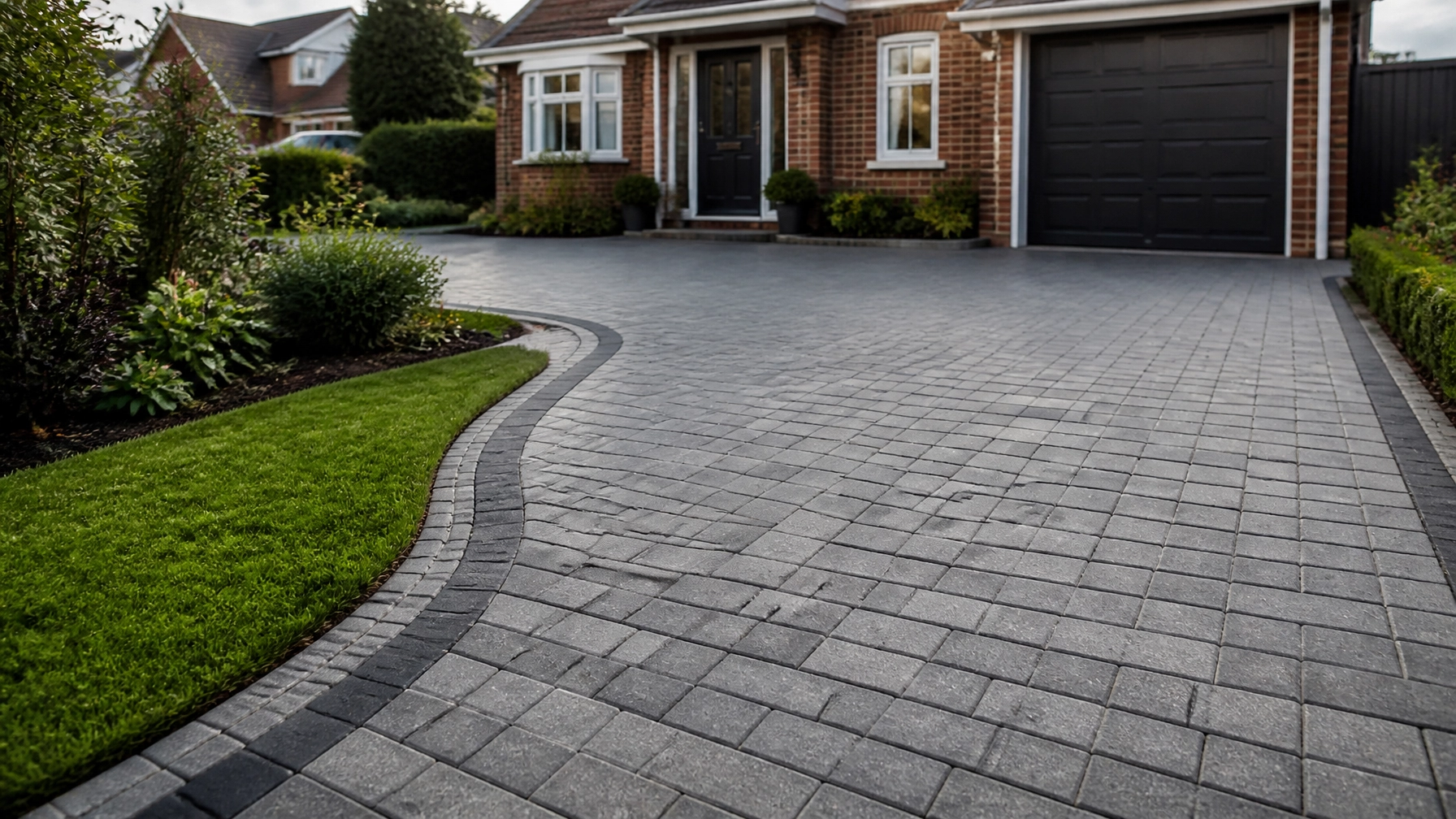
So, you’ve finally decided to do something about that tired, oil-stained patch of tarmac out the front? Good on you. A proper driveway isn’t just a place to park your car; it’s the "kerb appeal" that makes you smile every time you pull up after a long day at work. But before you go out and hire the first van with a ladder and a magnetic sign that passes by your house in Heaton Moor, there’s a bit of homework to do.
Installing a driveway in Stockport isn’t quite as simple as just "laying some stones down." Between the unpredictable North West weather and the specific regulations set by Stockport Council, there’s a lot that can go wrong if you aren’t careful.
At DW Landscaping Solutions, we’ve been getting our hands dirty across Stockport, Didsbury, and the surrounding areas for over 25 years. We’ve seen the good, the bad, and the "why on earth did they do that?" of driveway installations. To help you avoid the common pitfalls, we’ve put together this no-nonsense guide. Here are 10 things you absolutely need to know before you sign on the dotted line.
1. The Law: SUDS and Your Front Garden
You might think your front garden is your own business, but when it comes to hardstanding (that’s the fancy word for driveways), the government has a say. Since 2008, rules have been in place to prevent urban flooding.
If your new driveway is larger than 5 square metres and you’re using traditional, non-permeable materials (like standard tarmac or concrete) that drain into the public road or sewers, you’re going to need planning permission.
The pro tip: Most of our clients prefer to avoid the council paperwork and the extra fees. That’s why we focus on Sustainable Drainage Systems (SuDS). By using permeable block paving or resin-bound surfaces, the water simply soaks back into the ground. It’s better for the environment, and it keeps the planning officers off your back. You can read more about this in our detailed guide to drainage rules.
2. The Dropped Kerb Conundrum
Thinking of widening your driveway to fit that second car? You’ll likely need to widen the "vehicle crossing", better known as the dropped kerb.
In Stockport, you can’t just go out there with a sledgehammer. You need permission from Stockport Council Highways. They have a specific list of approved contractors and very strict specifications on how those kerbs are built to ensure they can take the weight of a vehicle without cracking the pavement or damaging underground pipes. We always recommend checking this first, as it can take a few weeks for the paperwork to clear.

3. Materials: It’s More Than Just "Grey Stone"
Choosing the right material is the fun part, but it’s also where people get overwhelmed. As driveway installers in Stockport, we usually see three main contenders:
- Block Paving: The classic choice. It’s incredibly durable and looks fab. If one block gets damaged (say, a nasty oil leak), you can just pop it out and replace it without ripping up the whole drive.
- Resin-Bound: This is the "new kid on the block" and it’s very popular in places like Bramhall and Hazel Grove. It’s smooth, permeable, and comes in loads of colours. (Just make sure it’s resin-bound, not resin-bonded: there’s a big difference in quality!).
- Indian Stone or Natural Stone: Usually reserved for patios, but it can work for driveways if the stone is thick enough (typically 30mm+) and laid on a proper "full bed" of mortar.
4. The Foundation: Why MOT Type 3 is King
Here’s where we get technical for a second. Most people focus on the top layer, but a driveway is only as good as what’s underneath it.
If you’re going for a permeable driveway, you cannot use standard "MOT Type 1" (which contains a lot of fine dust). You need MOT Type 3. It’s a coarser, "no-fines" aggregate that allows water to flow through it. We excavate the site, lay a geotextile membrane to keep the soil and stone separate, and then compact the Type 3 in layers. If your installer doesn't mention sub-base types, you might want to ask a few more questions!

5. Drainage and "The Fall"
Even with permeable materials, you need to consider where the water goes during those proper Mancunian downpours. A driveway should never be flat. It needs a "fall" or a slope: usually about a 1:60 ratio.
This ensures water runs away from your house and towards a drainage channel or a soakaway. We’ve seen far too many DIY jobs where the water pools right against the garage door. (And trust us, that’s not a conversation you want to have with your insurance company).
6. The "Cheap" Trap
We’ll be honest with you: we aren't the cheapest paving Stockport has to offer. And we’re okay with that. Why? Because we’ve spent years fixing driveways that were "done on the cheap."
If a quote seems too good to be true, it’s usually because they’re cutting corners on the sub-base, using inferior stone, or skipping the drainage entirely. A driveway has to support the weight of a 2-tonne SUV day in, day out. If the foundation is weak, it will sink, crack, and sprout weeds within 18 months. Investing a bit more upfront gives you the "peace of mind" that your drive will still look "chuffed-with-itself" a decade from now.
7. The DPC Rule: Keeping Your Home Dry
One of the most important technical details is the Damp Proof Course (DPC). Your driveway should always be at least 150mm (two brick courses) below the DPC of your house.
If an installer builds the driveway too high, they are effectively bridging the gap that keeps moisture out of your walls. This can lead to rising damp inside your home. We pay meticulous attention to these levels: because looking good is one thing, but keeping your home dry is quite another.

8. Maintenance Expectations
"Low maintenance" doesn’t mean "no maintenance." Even the best paving in Stockport needs a bit of love.
- Block Paving: You’ll need to top up the kiln-dried sand in the joints every few years.
- Resin: A quick power wash (on a low setting!) once a year will keep it looking fresh.
- Gravel: You might need to rake it occasionally to keep it level.
We always give our clients a proper chat about how to look after their specific surface so it stays in top condition.
9. Why You Don’t Want to be the Foreman
Managing a driveway project involves a lot of moving parts: skip hire, aggregate deliveries, muck-away lorries, and coordinating the weather. When you work with a company like DW Landscaping Solutions, we handle the full project management.
From the initial consultation to the final sweep-up, we’re on-site making sure everything goes to plan. You don’t need to worry about where the skip is going or if the stone has arrived; we handle every detail so you can just enjoy the result.
10. Choose a Local Pro with Stockport Roots
Finally, choose someone who knows the area. We’ve been working in Stockport for over 25 years. We know the soil types (plenty of clay around here!), we know the local suppliers, and we know exactly what the council expects.
When you hire a local professional, you aren't just getting a contractor; you’re getting someone who cares about their reputation in the community. We take pride in our work because we see it every day while driving through Heaton Mersey or Reddish.
Ready to transform your driveway?
If you’re looking for driveway installers in Stockport who prioritize quality, honesty, and a "proper" job, we’d love to help. We don’t do high-pressure sales; we just offer expert advice and bespoke designs tailored to your home.
Contact DW Landscaping Solutions today for a friendly chat about your project. Let’s build a driveway that actually lasts.
