
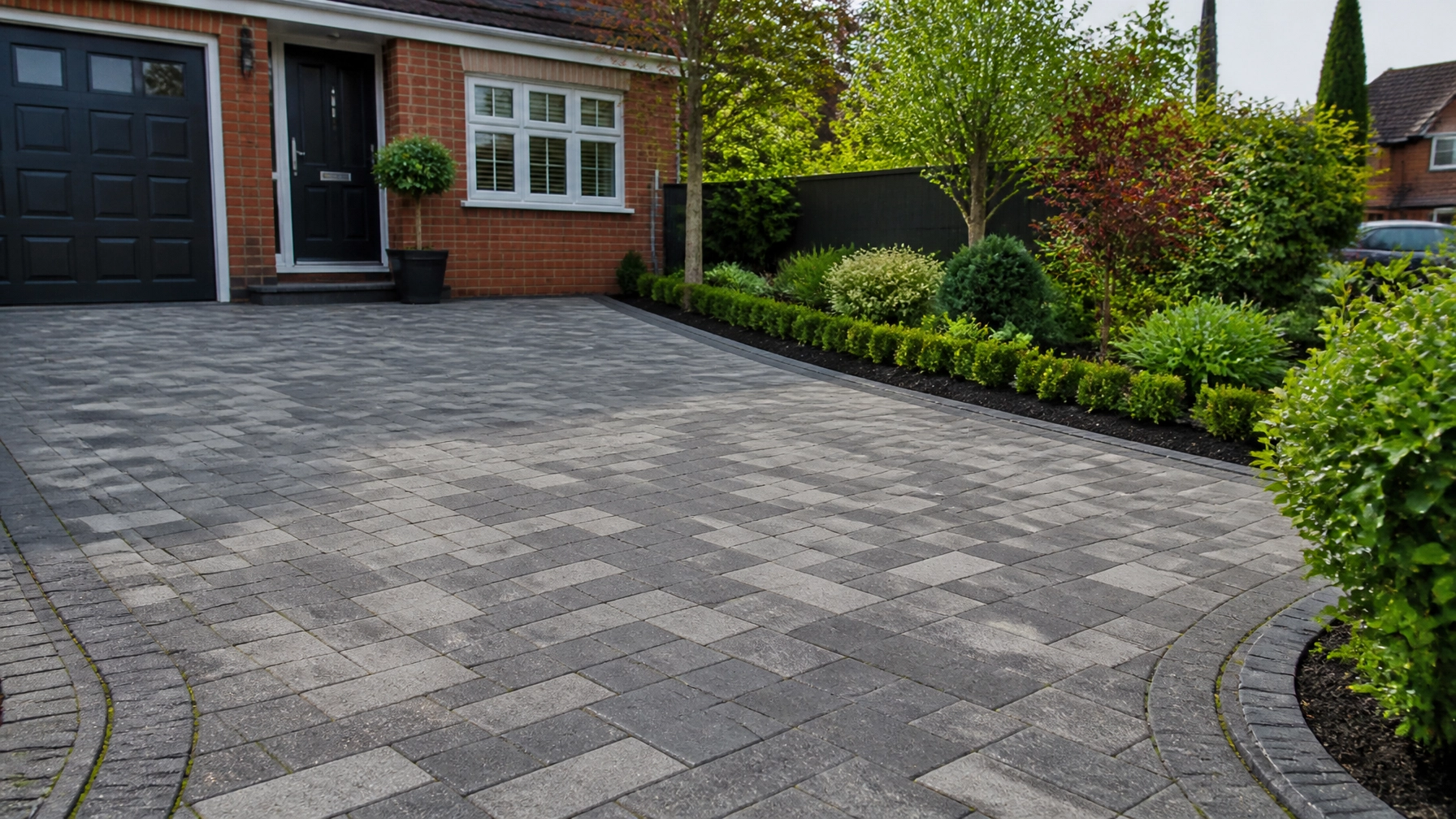
If you’re walking around Heaton Moor or Didsbury, you’ve probably seen them: the driveways that looked fab for six months and now look like a series of miniature hills and valleys. Or worse, the patios where the slabs are wobbling like a loose tooth every time you step on them.
When you’re looking for paving in Stockport, it’s easy to get swayed by a "cheap as chips" quote. But here’s the no-nonsense truth: we aren’t the cheapest driveway installers Stockport has to offer. Why? Because we refuse to cut corners on the stuff you can’t see.
A "proper job" starts deep underground. If the base isn't right, your dream garden or pristine driveway is on borrowed time. We’ve been at this for over 25 years, and if there’s one thing we’ve learned, it’s that longevity is built from the bottom up.
Here are the 7 things you absolutely need to know about base preparation before you sign any contract.
1. The Sub-Base: It’s Not Just "Some Gravel"
The sub-base is the literal foundation of your project. For a standard domestic driveway, we’re talking about MOT Type 1: a specific mixture of crushed stone and "fines" that, when compacted, creates a solid, load-bearing layer.
You’d be right in thinking that a garden path needs less than a driveway, but for a car-ready surface, you really want to see a compacted depth of at least 150mm to 200mm. If an installer tells you they’re just going to "level it off with a bit of grit," run for the hills. Without a proper sub-base, the weight of your car will eventually push those beautiful pavers into the soft earth below. We take the time to get this right so you can rest easy knowing your drive won't sink the first time you park the SUV on it.
2. Dealing With Stockport’s Heavy Clay
If you live in Hazel Grove, Reddish, or out towards Denton, you’ll know our local soil can be a bit of a nightmare. Stockport is famous for its heavy clay. Clay is "expansive," meaning it holds water like a sponge and expands and contracts with the weather.
This is where a lot of national firms or "jack-of-all-trades" builders get it wrong. In clay-heavy areas, you often need to dig deeper and potentially use a thicker sub-base to counteract the movement of the soil. We’ve spent decades getting our hands dirty in this local muck, so we know exactly how to prep the ground to stop the Stockport clay from ruining your investment.

3. The 100mm Rule (Compaction is Key)
You can have the best stone in the world, but if it isn't compacted properly, it's useless. A common mistake we see is installers throwing down 200mm of stone and running a plate compactor over the top once.
The problem? The vibration doesn't reach the bottom. You end up with a hard crust on top and loose stone underneath.
We work in "lifts." This means we lay about 75mm to 100mm of stone, compact it until it’s rock solid, and then add the next layer. It takes longer (and we have to charge for that time), but it ensures the entire depth of the base is stable. It’s the difference between a driveway that lasts 5 years and one that lasts 25.
4. Geotextile Membranes: The Essential Barrier
We like to think of a geotextile membrane as the "insurance policy" for your sub-base. It’s a heavy-duty fabric that sits between the soil and your crushed stone.
Why bother? Because over time, the weight of traffic can actually force your expensive sub-base stone down into the soft soil (and pull the soil up into the stone). This "mixing" weakens the foundation and leads to those dips and hollows we all want to avoid. A proper membrane keeps the two layers separate, maintaining the structural integrity of the stone. (And it helps with weed suppression too, which is always a win).
5. Drainage and SuDS: Staying Legal
Since 2008, UK law (specifically SuDS: Sustainable Drainage Systems) has been quite strict about front garden driveways. If you’re paving over 5 square metres, you either need to use a permeable surface or ensure the water drains into a soakaway on your own land. You can't just let it run out onto the public road or into the local sewers.
We take driveway drainage very seriously. Whether it’s installing Aco drains, building a soakaway, or using permeable block paving that lets water soak straight through into a specialized "Type 3" open-graded sub-base, we make sure your project is 100% compliant. It’s about more than just avoiding a fine from Stockport Council; it’s about preventing "The Stockport Pond" from forming at your front door every time it rains (which, let’s be honest, is often).

6. Edge Restraints: Keeping the "Creep" Away
Paving stones don’t just sink; they can also move sideways. This is known as "creep." Without a solid edge restraint, the pavers at the edge of your drive or patio will start to migrate into your flower beds or lawn, opening up gaps in the joints.
We use "proper" haunching: a concrete shoulder that sits behind the edge blocks, buried under the surface. It acts like a bookend, holding everything tight. Many installers just use a bit of thin mortar or, worse, nothing at all. We make it happen by ensuring every edge is locked in place, so your geometric patterns stay perfectly straight for decades.
7. Bedding and Jointing: The Final Precision
Once the sub-base is sorted, we move onto the bedding layer. For most block paving, this is sharp sand (grit sand). It needs to be screeded to a perfect, consistent thickness: usually around 30mm. If this layer is uneven, your pavers will be uneven.
Then there’s the jointing. This isn't just for looks. The sand between the bricks actually creates "interlock," allowing the pavers to share the load of a heavy vehicle. We use high-quality kiln-dried sand or polymeric mortars that resist wash-out and weed growth. It’s that final touch of finesse that makes the whole project look "fab" and perform even better.
Why Choose DW Landscaping Solutions?
Look, we know you have plenty of choices when searching for paving stockport. We also know that our quotes might be a bit higher than the guy who leaves a flyer through your door and offers to start tomorrow.
But we’re a local, family-run business with over 25 years of skin in the game. We live and work in the same areas you do: from Heaton Mersey to Dane Bank: and we take immense pride in our reputation. When we handle your project, you get:
- Full Project Management: From the first chat to the final sweep-up.
- Bespoke Designs: Tailored to how you actually use your garden (whether it’s for quiet retreats or loud family BBQs).
- Peace of Mind: We are fully insured and our work is built to last.
- Honesty: If your ground conditions are poor, we’ll tell you straight and explain how we’re going to fix it.
We’re not interested in a "quick fix" that looks good for a season. We’re interested in building a relationship with you and creating a space you’ll be chuffed with for years to come.

Ready to transform your outdoor space?
If you’re ready to stop dreaming and start building, give us a shout. We’d love to pop over for a chat and provide a no-obligation quote for your new driveway or patio. Let’s get it done right the first time.
